Motherhood, the journey of a lifetime, is a heartwarming and high-spirited ongoing process associated with the pleasure and satisfaction of bringing up a newborn. While the outside world might seem to notice just the visible modifications that come with maternal life, a fantastic alteration occurs in the mother’s brain. The neurological workings that arise during pregnancy and beyond while we are mothers are the topics of recent investigations, and the findings give us insight into how our brain is restructured to function differently.
Pregnancy and the Brain
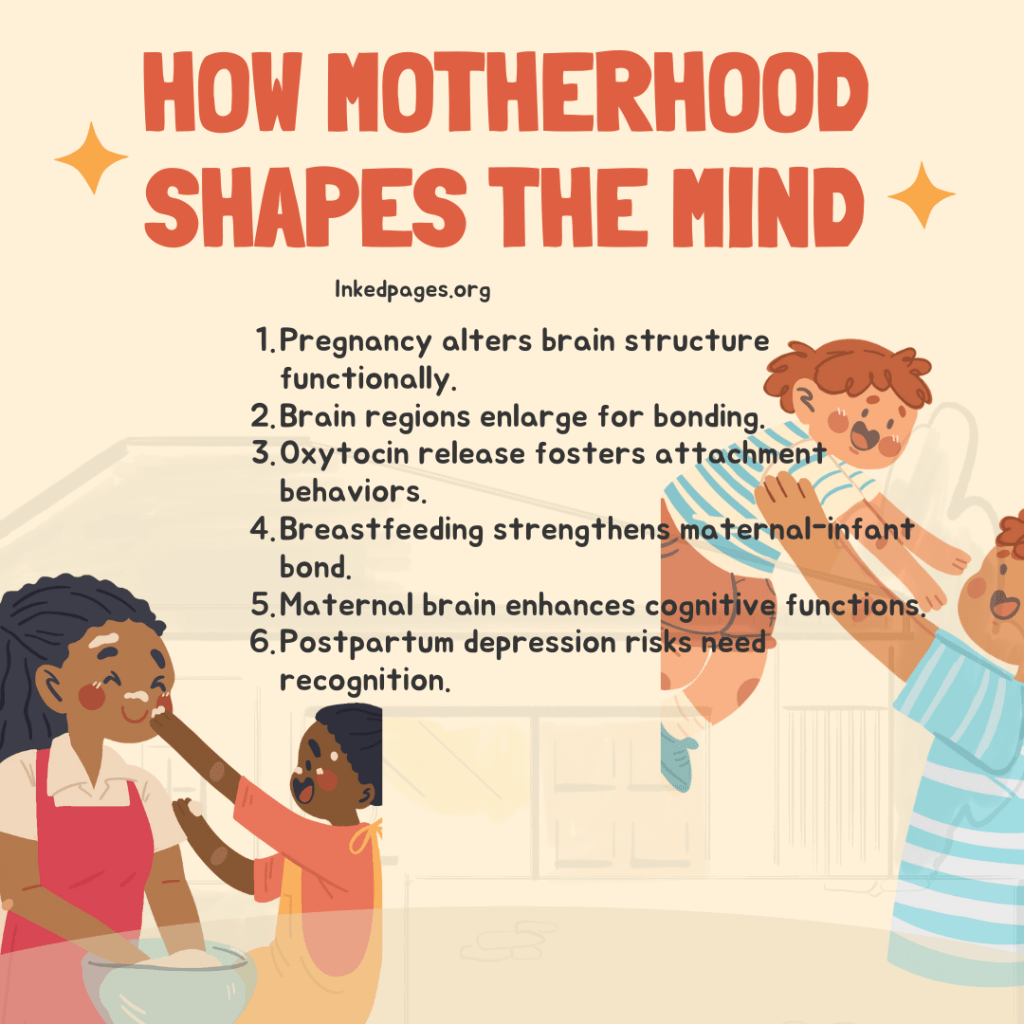
A woman experiences pregnancy, which is a stage filled with physiological deviations and heavy hormonal changes. Studies show that pregnancy causes the brain to grow new regions, realign old ones, and acquire new skills so that the mothers can deal with this new role of parenting, which is a whole new level of life. An exciting one of the adaptations involves brain development that leads to the enlargement of certain regions associated with social cognition, empathy, and emotional regulation. These adaptations may be beneficial for maintaining the attachment of a newborn or increasing responsiveness to its needs.
The Maternal Bond
The strong connection between a mother and her child is undoubtedly one of the most powerful emotions in the world. It has been found by neuroimaging studies that the release of oxytocin, popularly known as the “love hormone,” seizes to happen upon bonding between a mother and her child. Thus, oxytocin guarantees the creation of attachment to the mother and nurturance of the motherly instincts. In addition, being breastfed itself has been demonstrated to strengthen the so-called “maternal bond” while also having cognitive advantages not only for the mother but for her child as well.
Cognitive Changes
Motherhood activates certain parts of the brain, leading to different cognitive changes such as superior multitasking skills, increased alertness, and even intuition. The features of the executive part of the brain, which deal with topics such as decision-making and problem-solving, get finer-tuned as the mothers find themselves among the complexities of parenthood. Furthermore, exposure and motherhood can develop stronger character and adaptability, making the mother sound and empathic.
Challenges and Rewards
The fact is that motherhood is a rewarding thing but also has its setbacks that can affect your maternal mental well-being. It is crucial to recognize postpartum depression and anxiety that indeed all too often are met with lately, given the statistics that 1 in 5 new mothers are affected. Studies show that deviations in hormone levels, inadequate sleep, and social factors can all play a role in increasing the risk for mental disorders in the maternal population. To recognize the vitality of maternal health, the focus is on making provision for new mothers so that they are enabled to look after their well-being by way of self-development as well as community support.
Thus, motherhood is a transition that goes beyond physical and psychological traits and incorporates the brain’s more complex nature. Right from conception to parenting, the maternal brain makes fascinating transformations during pregnancy and the baby’s development, rewiring the way mothers look, respond, and nurture their children. By knowing the neuroscience of motherhood, we can acquire a more profound understanding of the maternal-fetal connection, showing humanity’s power to adapt and grow even under the influence of one of this world’s biggest challenges.



 Money Smart Parenting
Leave a comment