Cursing is something we instinctively avoid when our children are around. Many of us have even come up with creative alternative words that pop into our heads instead of curses, making it second nature to avoid swearing. However, not everyone is as careful. When your child interacts with other kids, they might pick up curse words from those whose parents aren’t as vigilant. It’s incredibly frustrating, especially if your child starts cursing at every opportunity. So, how do we deal with this?
Keep Your Cool
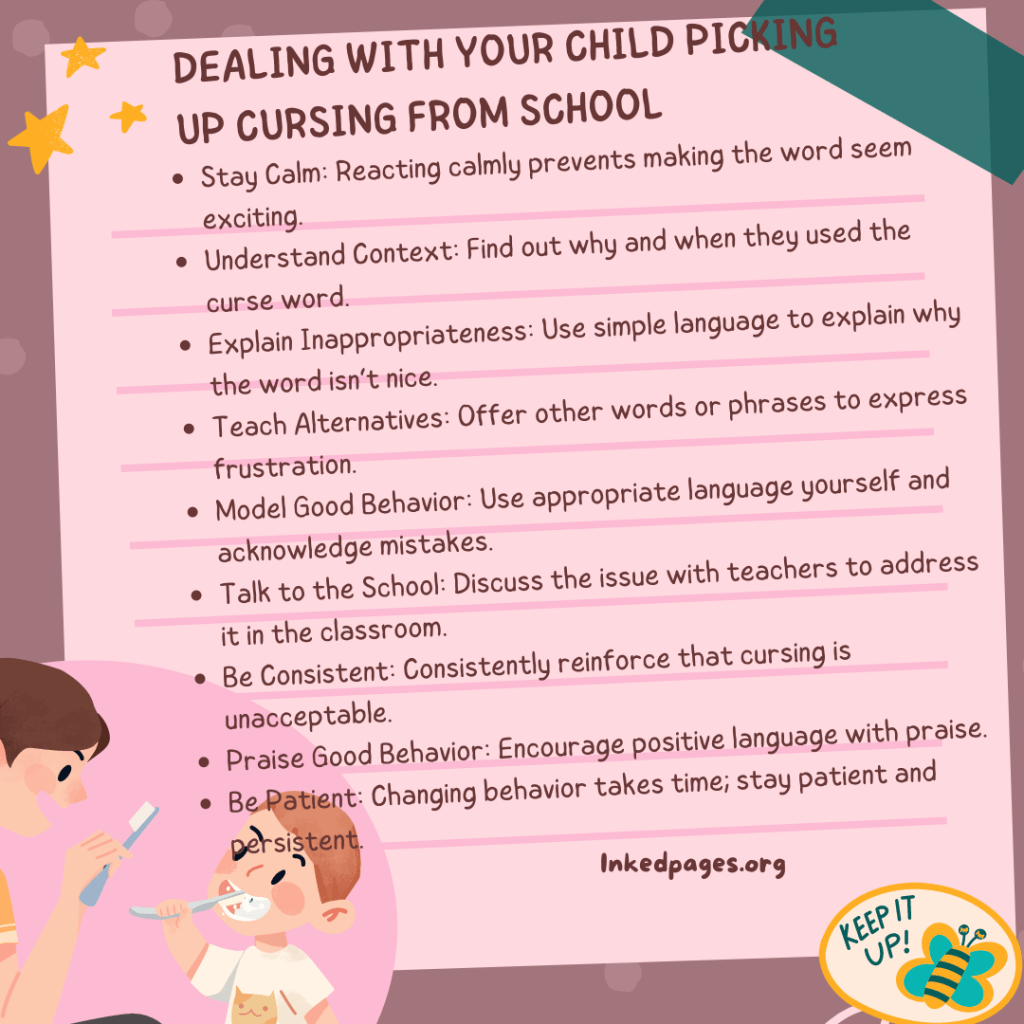
When you first hear your child use a curse word, stay calm. Reacting with anger or shock can make the word seem more exciting to them. Take a deep breath and approach the situation with a level head.
Understand the Situation
Try to figure out the context in which your child heard and used the curse word. Did they say it because they were upset, or were they just repeating something they heard? Knowing the context helps you address it more effectively. If they don’t understand the word’s meaning, it might be easier to explain why it’s inappropriate.
Explain Why It’s Not Okay
Kids often repeat what they hear without understanding the consequences. Explain to them that certain words can hurt people’s feelings and are not appropriate. Use simple language, such as, “That word isn’t nice. We don’t use it because it can make others feel bad.”
Offer Better Alternatives
Teach your child alternative words or phrases to use when they’re upset or frustrated. Providing them with appropriate ways to express their emotions can help prevent future cursing. For instance, instead of cursing, they could say, “I’m really angry,” or “This is so frustrating!”
Be a Role Model
Children learn a lot from watching us. Make sure you’re setting a good example by using appropriate language yourself. If you slip up, use it as a teaching moment. Acknowledge your mistake and explain why it was wrong.
Talk to the School
If your child is frequently hearing curse words at school, it might be a good idea to discuss the issue with their teacher. Teachers can help reinforce appropriate language in the classroom and address specific situations where inappropriate language is being used.
Stay Consistent
Consistency is crucial. If you let the word slide sometimes but react strongly at other times, it can confuse your child. Consistently reinforce that such language isn’t acceptable and remind them of the alternatives you’ve taught.
Praise Positive Behavior
Praise your child when they express their emotions appropriately without resorting to bad language. Positive reinforcement can encourage them to use the appropriate words and behaviors you’ve taught them.
Be Patient and Persistent
Changing behavior takes time, especially for young children. Be patient and persistent. Remember, they are still learning and growing, and your guidance is essential in helping them understand and navigate social norms.
Dealing with your child picking up curse words from school can be challenging, but with a calm and consistent approach, you can help them learn appropriate language. Teaching them alternative ways to express their emotions and reinforcing positive behavior will go a long way in curbing the use of inappropriate words. Your patience and guidance are key to helping your child develop healthy communication skills.



 Money Smart Parenting
Leave a comment