
From the moment a baby is born, they begin to develop a delicate bond with their mother. This connection is not just physical but emotional as well. One intriguing question that often arises is whether babies can sense when their mothers are sad. Research in psychology and child development suggests that they can, indeed, pick up on their mother’s emotional states. Let’s explore how this happens and why it matters.
Understanding the Mother-Infant Bond
The bond between a mother and her baby is profound and multifaceted. Babies rely on their mothers not just for physical nourishment but also for emotional security. From birth, infants are highly attuned to their mother’s facial expressions, voice tones, and body language. This sensitivity helps them navigate the world around them and form the basis for their emotional development.
The Science Behind Emotional Sensitivity in Babies
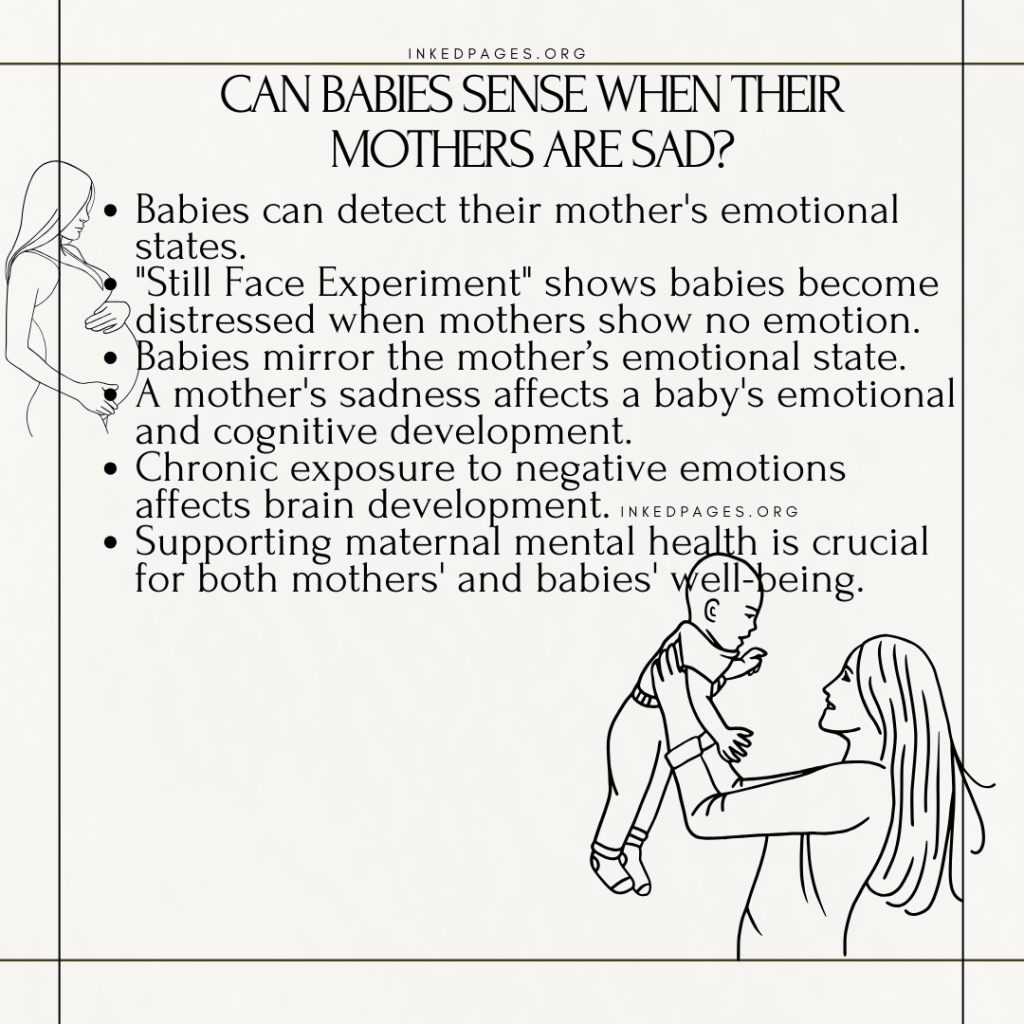
Studies show that even very young babies can sense and react to their mother’s emotions. When a mother is sad, her facial expressions, tone of voice, and body language change. Babies, being perceptive to these subtle cues, can often detect that something is different. For instance, an experiment known as the “Still Face Experiment” demonstrated that when mothers suddenly stopped interacting with their babies and maintained a still, emotionless face, the babies became distressed and tried to re-engage their mothers through various behaviors like smiling, cooing, or crying.
Furthermore, research has found that babies’ heart rates can change in response to their mother’s emotional state. When mothers exhibit signs of stress or sadness, their babies often mirror these emotions, showing increased levels of distress themselves. This mirroring effect highlights the deep emotional connection between mother and child.
The Impact of a Mother’s Sadness on a Baby
A mother’s emotional well-being is crucial for the healthy development of her baby. When a mother is consistently sad or depressed, it can affect her ability to interact positively with her baby. This, in turn, can impact the baby’s emotional and cognitive development. Babies rely on their mothers to provide comfort, reassurance, and a sense of security. When a mother is emotionally unavailable due to sadness or depression, the baby may experience feelings of insecurity and anxiety.
Moreover, chronic exposure to a mother’s negative emotions can lead to stress in babies, affecting their brain development. High levels of stress hormones like cortisol can interfere with the development of neural connections in the brain, potentially leading to long-term emotional and behavioral issues.
Supporting Mothers for the Benefit of Babies
Recognizing the interconnectedness of a mother’s and baby’s emotional states underscores the importance of supporting maternal mental health. Providing mothers with the resources and support they need to manage stress and maintain emotional well-being can have a profound impact on their babies’ development. This support can come from family, friends, healthcare providers, and community programs designed to assist new mothers.
Encouraging open conversations about mental health, offering counseling services, and promoting practices that enhance emotional well-being, such as mindfulness and stress-reduction techniques, can help mothers navigate the challenges of parenthood more effectively. By ensuring that mothers are emotionally healthy, we can create a nurturing environment that fosters the optimal development of their babies.
Final Thoughts
Babies are incredibly sensitive to their mothers’ emotional states and can sense when their mothers are sad. This ability to detect and respond to emotional cues is a crucial aspect of their early development. The emotional well-being of mothers is, therefore, essential not only for their own health but also for the healthy emotional and cognitive development of their babies. By supporting mothers and addressing their emotional needs, we can help ensure that both they and their babies thrive.



 Money Smart Parenting
Leave a comment