Motherhood is often seen as an instinctive and natural role for women. Popular culture, traditional beliefs, and even some scientific theories suggest that women have an inherent ability to care for and nurture children. However, the reality is more complex. This blog post will explore whether motherhood truly comes naturally or if it is shaped by a combination of biological, psychological, and social factors.
Biological Instincts
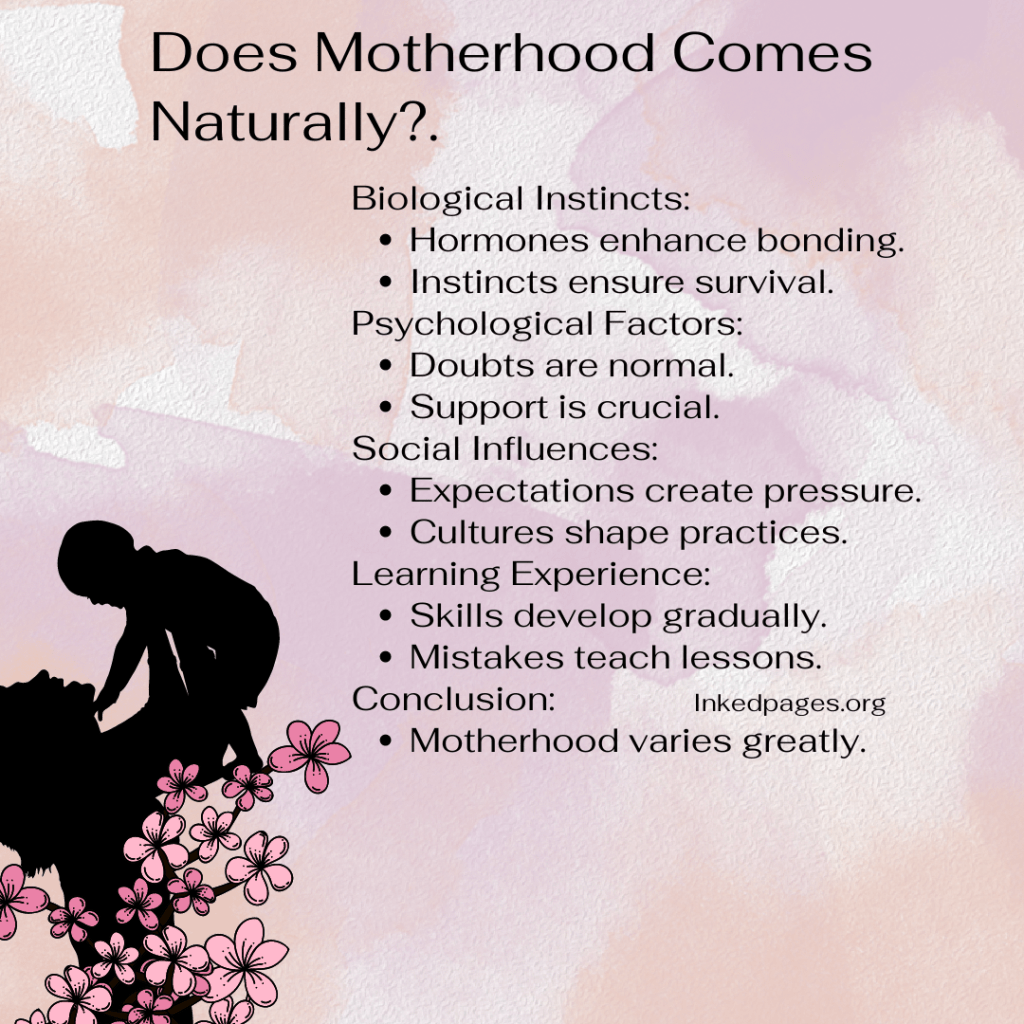
There are biological aspects of motherhood that support the idea that it comes naturally. Hormones like oxytocin, often called the “love hormone,” play a significant role in bonding between a mother and her baby. During pregnancy and after childbirth, oxytocin levels increase, promoting feelings of attachment and the desire to care for the newborn.
Additionally, evolutionary biology suggests that women have developed certain instincts to protect and nurture their offspring. These instincts could be seen as natural drives to ensure the survival of their children, which would enhance the chances of passing on their genes.
Psychological and Emotional Factors
While biology plays a role, psychological and emotional factors are equally important in understanding motherhood. Not every woman experiences an immediate or strong maternal instinct. Many new mothers go through periods of doubt, fear, and confusion, questioning their ability to care for their child. This is normal and does not mean they are lacking in maternal instincts.
The transition to motherhood can be challenging and requires time and support. Some women may feel an instant bond with their baby, while others might need more time to develop that connection. It’s essential to recognize that both experiences are valid and natural.
Social and Cultural Influences
Social and cultural factors also shape the experience of motherhood. Societal expectations and norms often dictate how mothers should behave and feel. These expectations can create pressure and unrealistic standards for women, making them feel inadequate if they do not immediately feel a strong maternal instinct.
Cultural practices and traditions play a significant role in how motherhood is perceived and practiced. For example, in some cultures, extended family members play a crucial role in raising children, providing new mothers with a support system that can help them adjust to their new role.
The Role of Learning and Experience
Motherhood is also a learning process. Many aspects of caring for a child are learned through experience rather than being purely instinctual. New mothers often rely on advice from family, friends, and healthcare professionals. Parenting classes and support groups can also provide valuable information and reassurance.
The skills and confidence required for motherhood develop over time. Mistakes and challenges are part of the journey, and learning from these experiences is crucial in becoming a more confident and capable mother.
So, does motherhood come naturally? The answer is not straightforward. While biological instincts and hormones play a role, motherhood is also shaped by psychological, emotional, social, and cultural factors. It is a unique and personal experience for every woman. Some may feel a natural affinity for motherhood, while others may find it more challenging. Both experiences are normal and valid.
Understanding that motherhood is a complex and multifaceted journey can help us appreciate the diverse ways women experience and embrace this role. It is essential to provide support and understanding to all mothers, recognizing that their paths may be different but equally valuable.



 Money Smart Parenting
Leave a comment