It’s bedtime, and your toddler is supposed to be drifting off to sleep. Instead, they’re wide awake, eyes darting toward the closet or under the bed, convinced that something scary is lurking. As a parent, this might seem puzzling, even frustrating. Why are they so frightened by things that aren’t real?
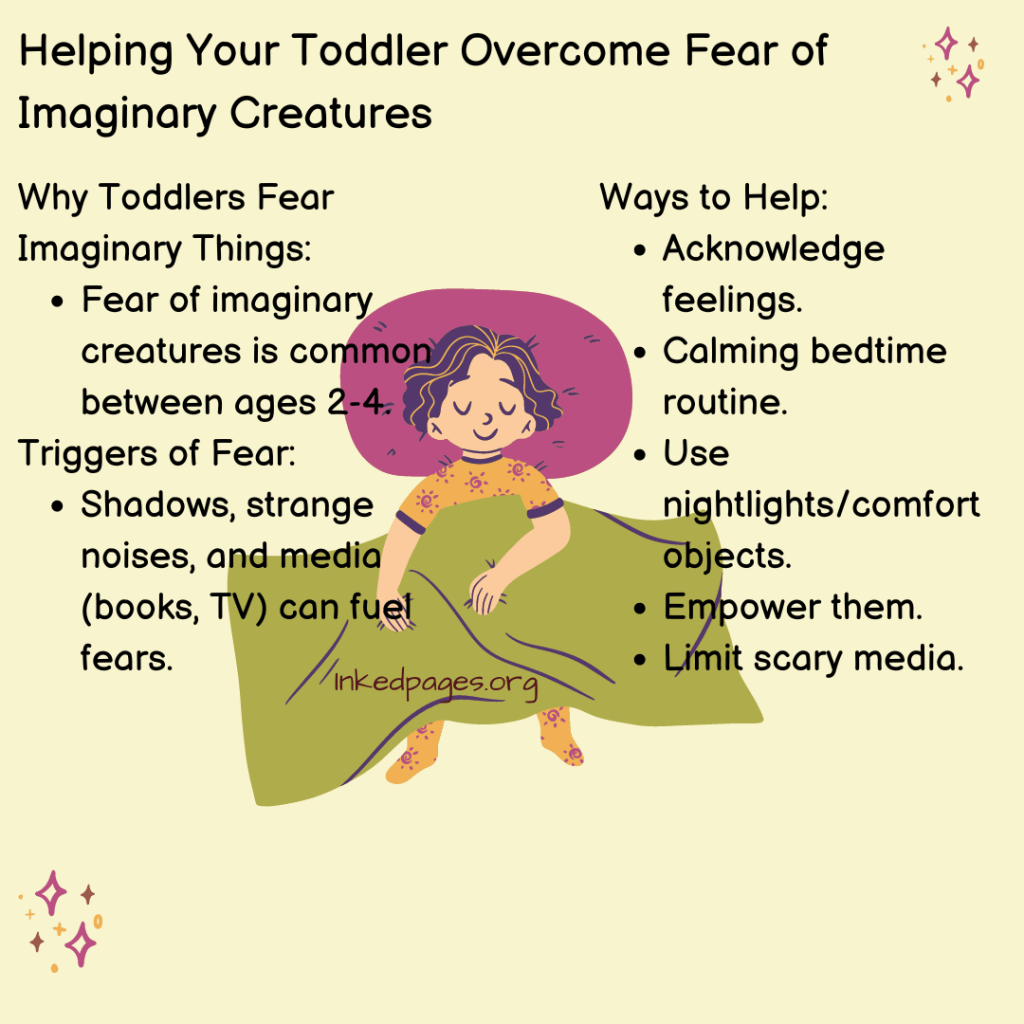
Why Toddlers Fear Imaginary Things
Toddlers are at a fascinating stage of cognitive development where their imagination is blossoming. At the same time, their understanding of reality versus fantasy is still developing. This is why they might truly believe that a monster could be hiding in the closet, even if they’ve never seen one. Their growing imagination helps them engage with the world creatively, but it also means they can dream up all sorts of scary scenarios.
Around the ages of two to four, children’s imaginations become incredibly vivid. They’re learning to create stories and scenarios in their minds, and this newfound creativity can sometimes lead to fear. When they hear a strange noise or see a shadow in their room, their imaginative brains might interpret these as signs of something scary, like a monster. Because they haven’t fully developed the ability to differentiate between what’s real and what’s not, these fears can feel very real to them.
The Role of Books, TV, and Stories
The stories and media that toddlers are exposed to can also contribute to these fears. While fairy tales and cartoons are fun, they often include elements of danger or scary characters. A dragon in a storybook might not be terrifying to an adult, but to a toddler, it can be the source of nighttime anxiety. Their minds are like sponges, absorbing everything they see and hear, and sometimes, this leads to fears that are hard to shake.
How to Help Your Toddler Overcome These Fears
- Acknowledge Their Feelings: Dismissing your child’s fear can make them feel misunderstood. Instead, acknowledge their feelings and reassure them that they are safe. Saying something like, “I understand you’re scared of the monster, but remember, there are no monsters here” can be comforting.
- Create a Calming Bedtime Routine: A consistent and calming bedtime routine can help your toddler feel secure. Reading a happy story, dimming the lights, and having a favorite stuffed animal nearby can create a sense of safety.
- Use Nightlights or Comfort Objects: Sometimes, the dark is what makes their imagination run wild. A nightlight or a favorite blanket can provide comfort and reduce the fear of what’s lurking in the shadows.
- Empower Them: Giving your toddler a sense of control can be helpful. For instance, you can pretend to “banish” the monster together or let them check the closet with you to show that it’s empty.
- Limit Exposure to Scary Media: Be mindful of the stories, TV shows, and movies your toddler is exposed to. Even seemingly mild content can spark fears in their developing minds.
When to Seek Help
While fear of imaginary things is a normal part of development, if your toddler’s fear is intense or persistent, interfering with their sleep or daily activities, it might be worth discussing with a pediatrician. They can offer guidance and ensure that there isn’t a deeper issue at play.
Toddlers’ fear of imaginary creatures like monsters in the closet is a normal part of growing up. As their imaginations grow, so do their fears, and it’s our job as parents to guide them through this stage with understanding, comfort, and a little bit of creativity. With time and support, these fears will likely fade, leaving behind only sweet dreams.

 Money Smart Parenting
Leave a comment