“Before the gifts, teach the goal.”
December is exciting for kids—and expensive for parents.
Between gift expectations, holiday ads, and peer pressure, many families overspend not because they lack discipline, but because no one planned together. This is where a Holiday Budget Planner for Kids becomes more than a worksheet—it becomes a life lesson.
Why Teaching Kids Holiday Budgeting Matters (Especially in December)
Holiday spending pressure is real. Kids see gifts everywhere but rarely see the decisions behind them. When children don’t learn planning early, they grow up associating money with:
- Emotion
- Urgency
- Comparison
Instead of:
- Intentional choice
- Limits
- Trade-offs
The holidays are the best teaching moment because money decisions feel real, emotional, and time-bound.
What Is a Holiday Budget Planner for Kids?
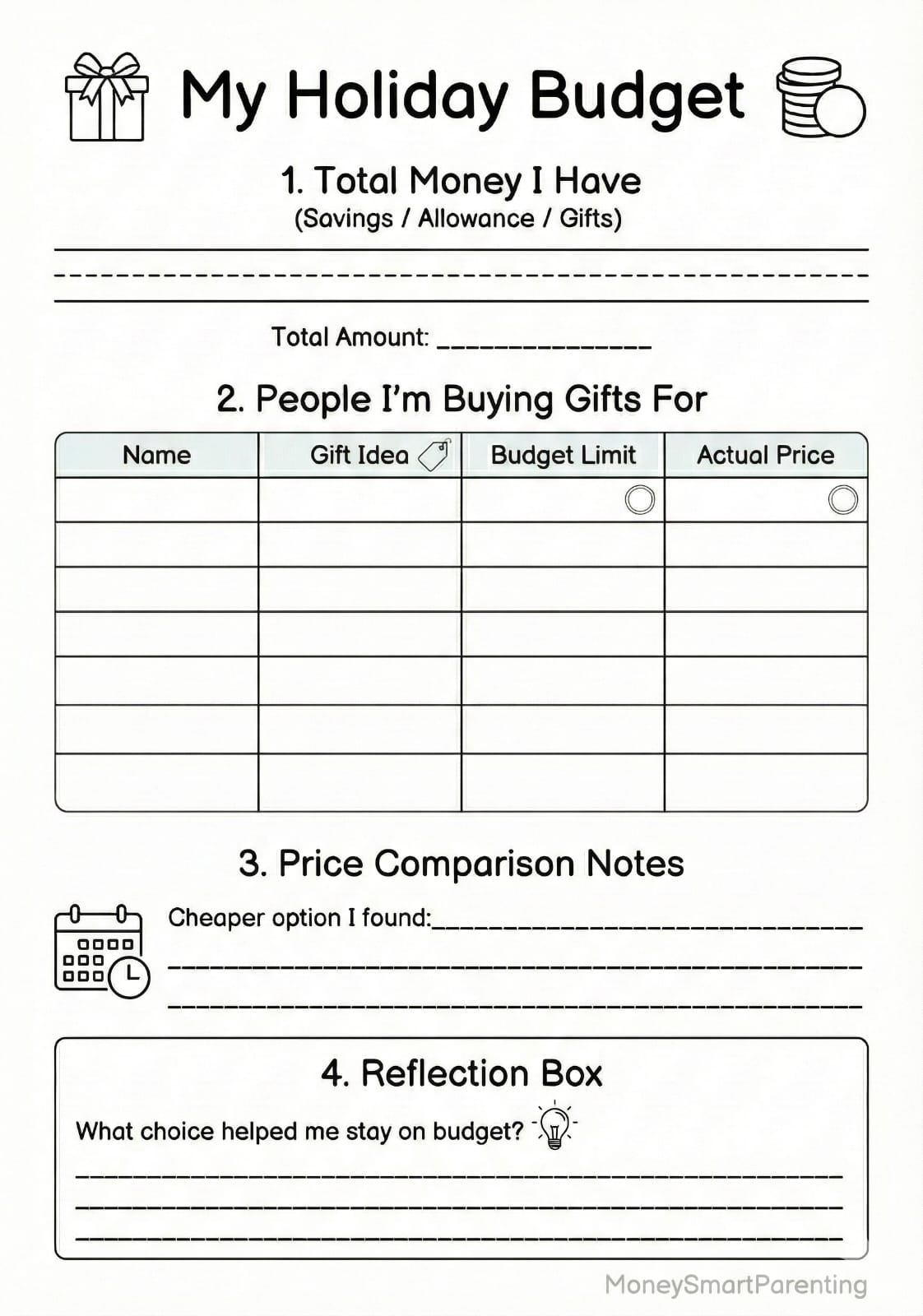
A Holiday Budget Planner for Kids is a simple, age-appropriate worksheet that helps children:
- Understand how much money they actually have
- Decide who they want to buy gifts for
- Set spending limits
- Compare prices before buying
It shifts kids from “I want” to “I choose.” Your child’s budget planner doesn’t need complexity—just clarity.
What to Include in a Kid-Friendly Holiday Budget Worksheet
- Total Money Available: Help kids write down how much money they have from savings, allowance and small holiday gifts. This anchors expectations in reality.
- List of People They Want to Buy For: Kids list names—family, friends, teachers. This naturally introduces prioritization.
- Spending Limit Per Person: They decide how much to allocate to each person before shopping. This is where impulse control begins.
- Space to Note Prices: They learn that prices tell stories—and choices matter. Kids compare:
- Online vs in-store prices
- Different shops
- Different gift options
Simple Holiday Budgeting Activity for Kids (Step-by-Step)
Turn this into a 30-minute family activity:
- Sit down with the worksheet
- Let your child list everyone they want to buy for
- Set a firm money limit based on what they already have
- Compare prices together (phone, store, flyers)
- Adjust choices—not the budget
Important: Don’t rescue the plan.
Guide their thinking instead.
The Money Mindset This Builds (Long After December)
This one activity teaches kids:
- Delayed gratification
- Decision-making under limits
- Emotional control around spending
- Confidence with money
A child who learns to plan during holidays grows into an adult who doesn’t panic during financial pressure.



 Money Smart Parenting
Leave a comment