For many families, budgeting feels like something adults deal with quietly—late at night, behind closed doors, or away from curious ears. Parents often say things like:
“They’re too young to understand.”
“I don’t want to stress them.”
“I’ll teach them when they’re older.”
But here’s the truth most of us learn too late:
By the time kids are “old enough,” their money habits are already forming.
Budgeting isn’t an adult problem. It’s a family skill—and the earlier it’s normalized, the easier it becomes.
Why Parents Hide Budgeting From Kids (And Why It Backfires)
Most parents hide budgeting with good intentions.
They want to:
- Protect their children from financial stress
- Avoid difficult money conversations
- Keep adult responsibilities off young shoulders
But when budgeting is invisible, kids still learn something—just not what we intend.
They learn that:
- Money appears when needed
- Spending happens without planning
- Decisions are emotional or automatic
Silence doesn’t mean no lesson. It simply means the lesson is being learned by default.
The Real Issue Isn’t Numbers—It’s Visibility
When people hear “budgeting,” they think of spreadsheets, percentages, and complicated systems. That’s not how children learn. Kids don’t need to understand math formulas to understand money. They need to see how decisions are made.
Budgeting becomes meaningful when children hear:
- Why money is being spent
- Why money is being saved
- Why some things wait
This is how money stops feeling random—and starts making sense.
What Budgeting as a Family Skill Actually Looks Like
Family budgeting doesn’t mean involving kids in adult stress or financial pressure. It means letting them observe simple decision-making. For example:
“We planned this money for food this week.”
“This money is saving for later, not today.”
“We have to choose—spend now or save for something bigger.”
These aren’t lectures. They’re everyday conversations. Over time, kids begin to understand that money:
- Has limits
- Has priorities
- Needs a plan
That’s budgeting—without sitting anyone down.
One Simple Family Budgeting Habit to Start Today
If you do only one thing, do this:
👉 Say the plan for the money out loud. That’s it. No charts. No percentages. No long explanations. Just name what the money is for when it shows up.
With repetition, children naturally learn:
- Money has jobs
- Choices have trade-offs
- Planning comes before spending
This habit alone builds a strong foundation for financial confidence.
“But Won’t Budgeting Stress My Child?”
This is one of the most common concerns—and it’s completely valid. The reality is: Kids aren’t stressed by calm information. They’re stressed by confusion and secrecy.
When budgeting is simple, consistent, and spoken calmly. Children feel safer, not burdened. You’re not asking them to solve adult problems. You’re showing them how decisions are made.
What Kids Learn When Budgeting Is a Family Skill
When budgeting is visible at home, children grow up believing:
- Money is manageable
- Planning is normal
- Waiting has purpose
- Decisions matter
These beliefs shape how they handle money long after childhood.
A Simple Way to Help Kids Practice This Visually
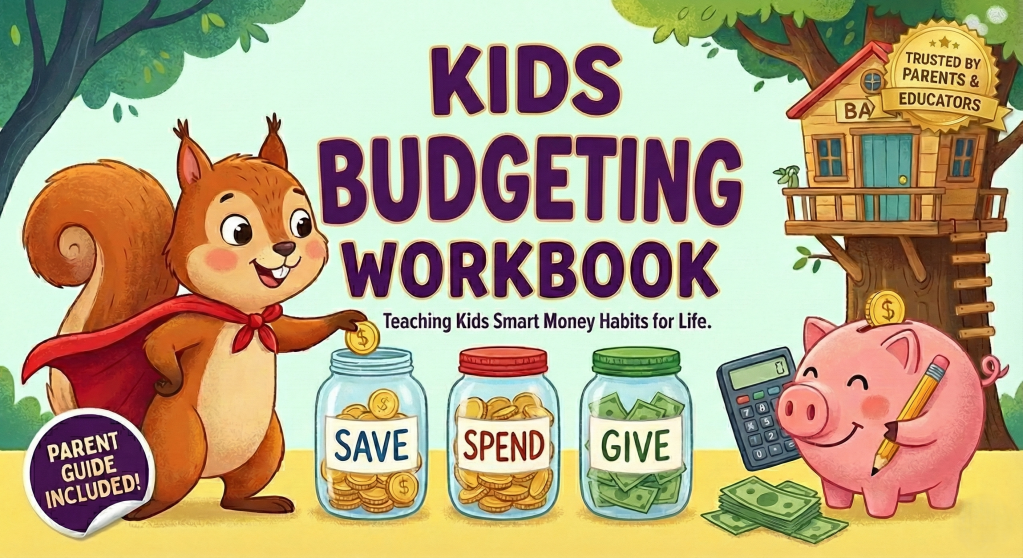
Some children learn best by doing, not just listening. To support these everyday money conversations we have created a budgeting workbook for kids. This workbook helps kids build real money skills through simple, hands-on practice. Children learn how to earn, plan, save, spend wisely, and give—using everyday situations they already understand.
With a full-year savings tracker, weekly 3-jar system (earned, spent, saved), and guided activities, kids see how their choices add up over time. No currency limits, no pressure, just practical money habits practiced at home.
Designed to support parents, reduce money struggles, and raise confident, money-smart kids—one week at a time.
👇Get a free printable budgeting workbook, and a fillable pdf budgeting workbook.



 Money Smart Parenting
Leave a comment