Most parents think wealth management starts with numbers—how much to save, invest, or hand out as allowance. In reality, it starts with behavior, visibility, and emotional safety.
Children don’t learn money from instructions. They learn it from what feels normal at home. When money is only received, kids learn to wait. When money is built, kids learn to think.
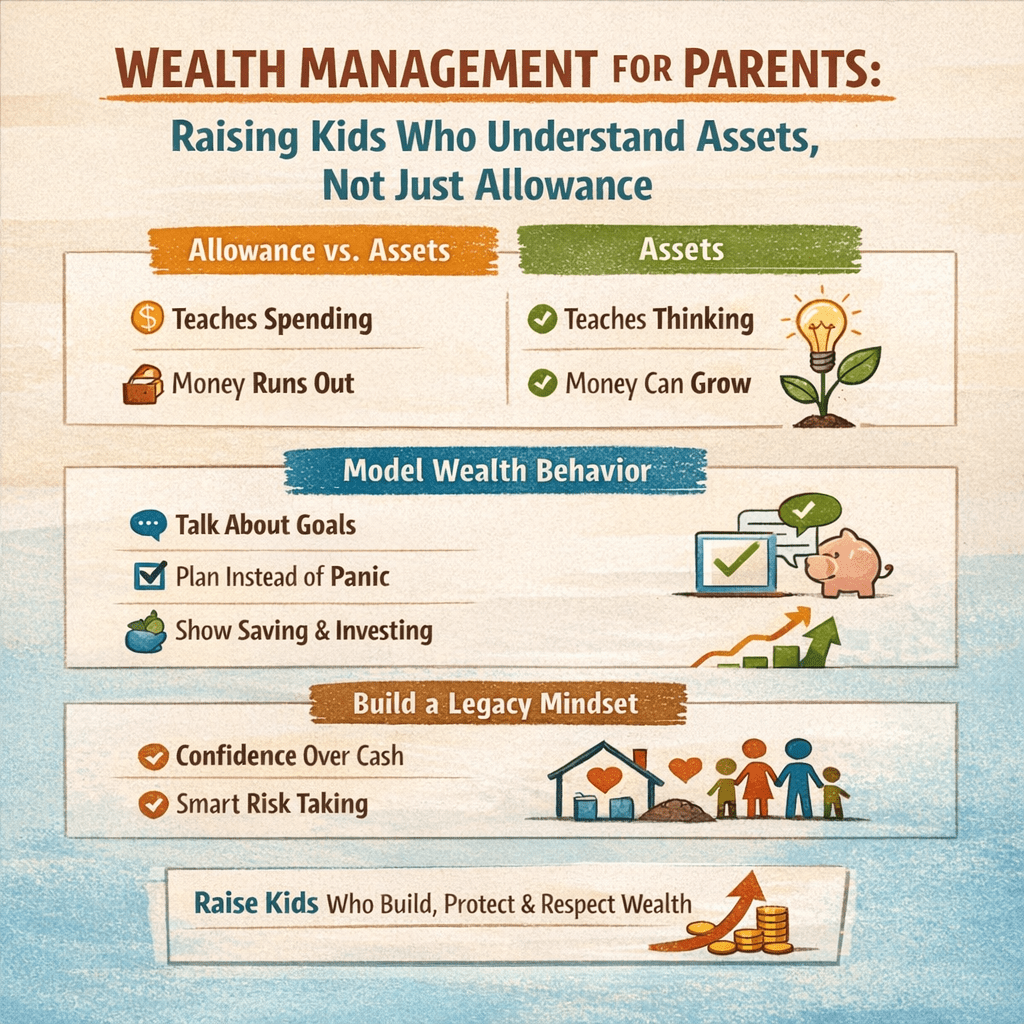
Allowance vs. Assets: What Kids Actually Learn
Allowance isn’t wrong—it’s just incomplete. Allowance teaches:
- Money comes from adults
- Money is meant to be spent
- Money runs out
Assets teach:
- Money can grow
- Money can be planned
- Money can work over time
A simple example: a child who receives weekly allowance learns timing. A child who helps run a small weekend project or manages a growing savings system learns ownership. Ownership changes the questions kids ask—from “Can I buy this?” to “How does this grow?”
The Sweet Spot of Wealth Management for Parents
The goal isn’t choosing between enjoying today or planning for tomorrow. The sweet spot is managing money in a way your children can see, understand, and emotionally trust.
That means:
- Talking about plans instead of hiding stress
- Using systems instead of reacting emotionally
- Showing consistency instead of perfection
Children copy patterns long before they understand numbers.
Legacy Is Built Before It’s Passed Down
Inheritance is often treated as the finish line. It’s actually the last step. Long before money is passed down, children absorb:
- Financial habits
- Emotional reactions to money
- Beliefs about risk and security
When kids grow up around assets—savings systems, long-term goals, or income that isn’t tied to constant labor—they inherit financial confidence, not just money.
Modeling Behavior Shapes Financial Identity
Children don’t need complex explanations. They need repetition. When kids see:
- Money being planned, not argued over
- Saving happening automatically
- Long-term goals prioritized consistently
They internalize a powerful belief: Money is manageable.
That belief becomes part of who they are.
Emotional Safety: The Overlooked Wealth Asset
A financially calm home does something powerful—it tells a child the future is handled. Emotional safety around money reduces:
- Impulsive behavior
- Fear-based decisions
- Anxiety around finances later in life
Kids raised in stable financial environments grow up more patient, confident, and resilient with money. That emotional regulation is a form of wealth.
Raising Kids Who Understand Assets, Not Just Allowance
This isn’t about having more money. It’s about visibility and intention. It looks like:
- Systems instead of random rewards
- Conversations instead of secrecy
- Long-term thinking instead of quick fixes
When children understand assets early, they don’t just want money. They know how to build, protect, and respect it.
Wealth Management Is Parenting in Action
For parents, wealth management isn’t just portfolios and returns. It’s:
- Legacy thinking
- Behavior modeling
- Emotional safety
Raise kids who understand assets—not just allowance. That’s how generational wealth actually works.
Teach Asset Thinking at Every Age
Want practical ways to teach kids asset thinking at home—without guessing what to teach or when?
The Financial Literacy Roadmaps are designed to meet your child at their current stage and guide you step-by-step through the money skills that actually matter at each age.
Each roadmap gives you:
- Age-appropriate money concepts
- Simple systems kids can manage independently
- Clear progression from allowance thinking to asset thinking
Whether your child is just learning to save or ready to understand ownership, there’s a roadmap that fits.
Start with the roadmap for your child’s age and begin building financial habits that grow with them.
The systems you put in place today become the confidence—and legacy—they carry into adulthood.



 Money Smart Parenting
Leave a comment