Most people think wealth is built in big moments—winning deals, viral businesses, sudden breakthroughs. But real wealth? It’s built quietly. Repetitively. Almost invisibly.
That’s why rich habits look boring.
No flashy splurges. No dramatic lifestyle upgrades. No constant hustle posts. Just calm, consistent decisions made every day. And that’s exactly why they work.
The Big Lie: Wealth Is Built in Big Moments
We’re taught to associate wealth with dramatic turning points—landing a huge deal, launching a viral business, or getting a sudden income jump.
In reality, wealth is built in small, daily decisions that don’t feel impressive at all.
Everyday wealth management is not about intensity.
It’s about consistency.
And consistency is rarely entertaining.
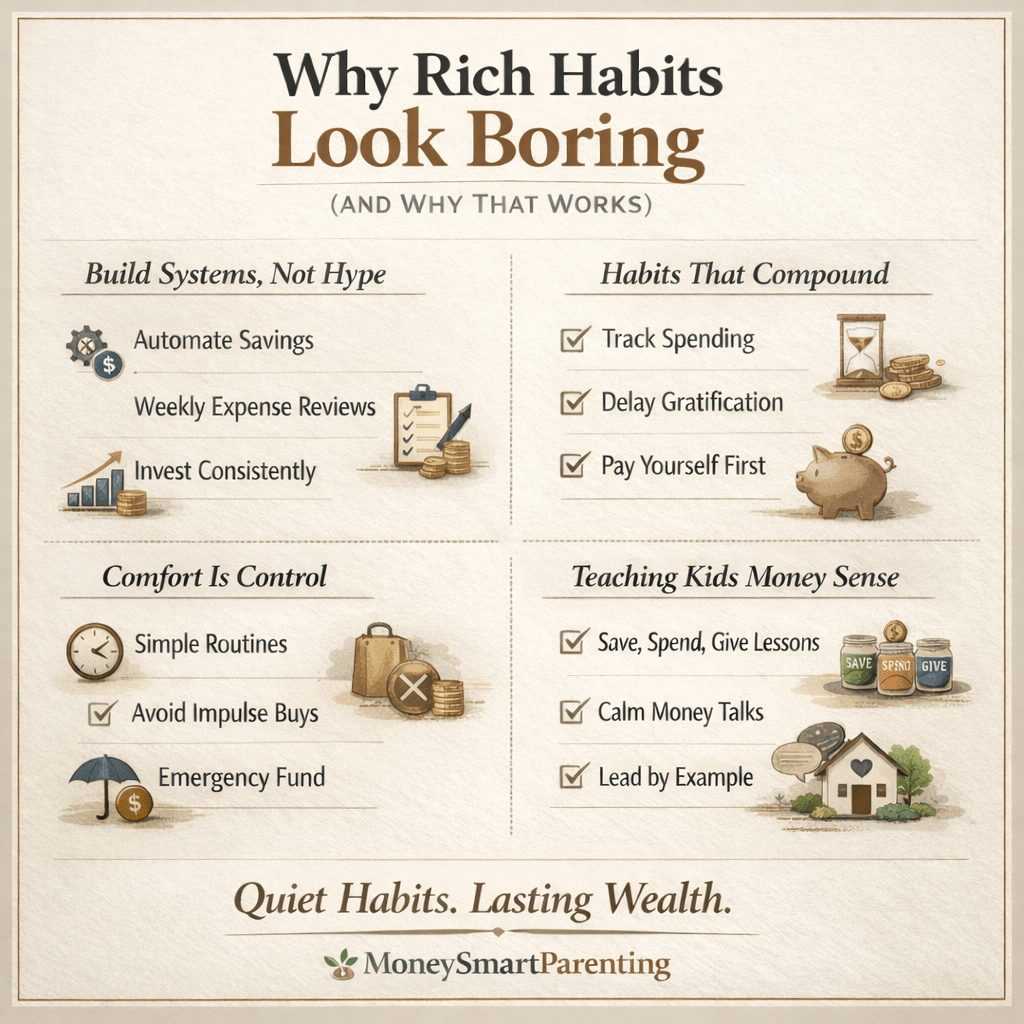
Systems Beat Motivation Every Time
Wealthy people don’t rely on willpower. They rely on systems that remove emotion from money.
Here’s what that looks like in daily life:
- Automated savings
Money moves into savings before it can be spent, eliminating the “I’ll save what’s left” trap. - Weekly expense check-ins
Not obsessive tracking—just regular awareness that prevents surprises and overspending. - Scheduled investing
Same amount, same time, regardless of market mood. No guessing. No panic. - Lifestyle stability despite income growth
When income increases, expenses don’t automatically follow. This gap is where wealth quietly grows.
Research from Duke University suggests that over 40% of daily actions are habits, not conscious decisions. Wealth sticks when it becomes habitual, not heroic.
Why Boring Habits Compound Faster Than Exciting Ones
Compounding rewards patience, not personality.
Daily “boring” habits include:
- Tracking spending instead of avoiding bank apps
- Planning meals to reduce impulse food spending
- Delaying gratification even when money is available
- Reinvesting returns instead of upgrading lifestyle
- Paying yourself first, every single month
Each action is small.
But together, they create predictability, and predictability is the foundation of financial peace.
The irony?
By the time results look impressive, the habits are already years old.
The Quiet Superpower: Designing Financial Comfort
Most people think comfort comes from having more money.
In reality, comfort comes from reducing financial chaos.
Wealthy individuals intentionally limit decision fatigue:
- Fewer impulse purchases
- Clear spending rules
- Simple routines
- Financial buffers for emergencies
This isn’t about deprivation.
It’s about control over outcomes.
When money stops being emotional, it starts being effective.
What Everyday Wealth Management Looks Like at Home
Wealth management isn’t reserved for high-net-worth individuals or investment firms. It starts in ordinary households.
Examples you see every day:
- A parent teaching children to divide money into save, spend, and give
- Choosing assets that grow over time instead of appearances that fade
- Reviewing account alerts instead of avoiding them
- Talking about money calmly—even when it’s tight
These actions don’t attract attention, but they build financial confidence that lasts.
Why Social Media Can’t Sell Boring Wealth
Algorithms love drama:
- Overnight success stories
- Extreme hustling
- Flashy spending
But boring wealth doesn’t perform well online because it’s:
- Repetitive
- Slow
- Disciplined
- Emotionally regulated
Still, boring wealth wins in real life.
The goal isn’t to look rich.
The goal is to live without financial anxiety.
Teaching Children That Wealth Is Calm, Not Chaotic
Children absorb money behavior long before they understand money language. When kids consistently observe:
- Calm responses to bills
- Planned spending
- No panic during emergencies
- Thoughtful financial decisions
They learn that money is a tool, not a source of stress or status. This is how generational wealth actually begins—quietly, repeatedly, at home.
Final Thought: Boring Is the New Rich
If your financial life feels predictable, calm, and even a little uneventful—you’re doing something right.
Wealth doesn’t shout. It compounds.
Reflection question for you:
What “boring” money habit could you commit to daily that your future self would thank you for?
If this resonated, share it with someone who thinks wealth has to be flashy—or explore more everyday systems that turn ordinary routines into long-term freedom.
Quiet wealth always wins.



 Money Smart Parenting
Leave a comment